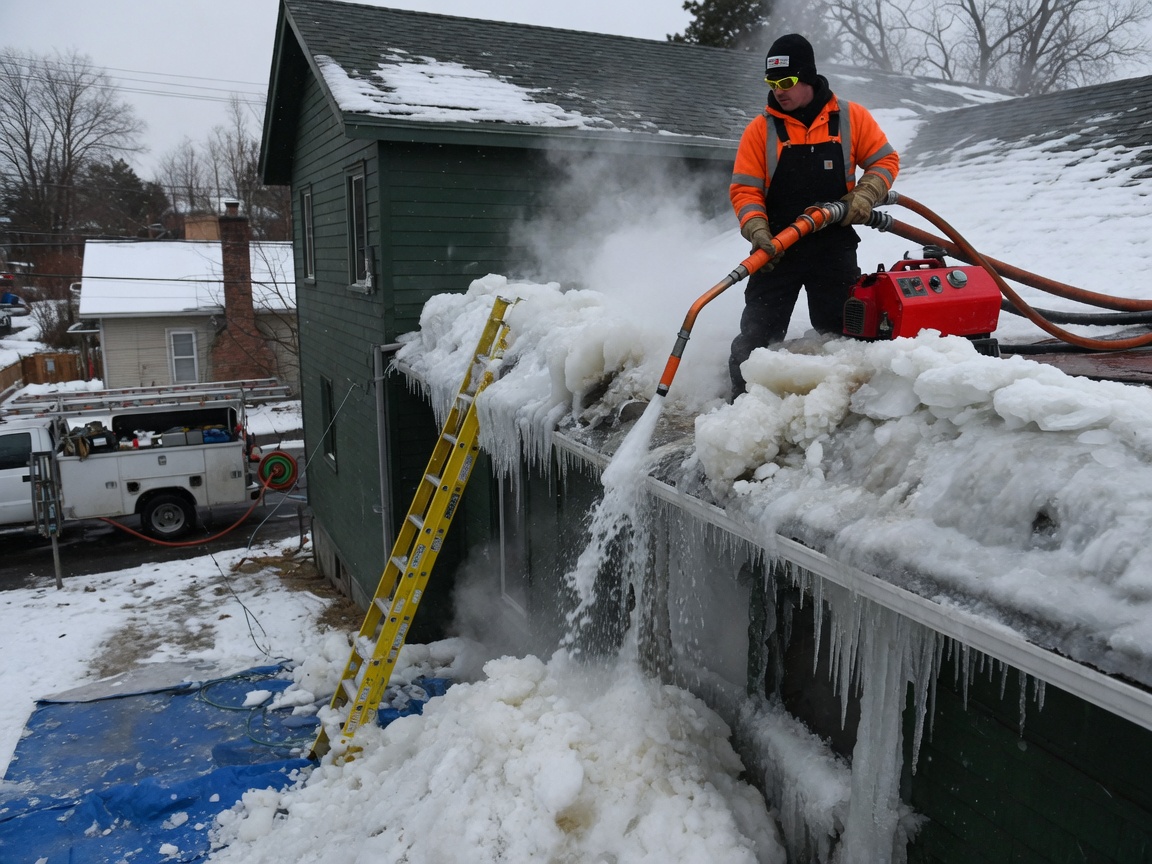
Spokane winters bring repeated freeze-thaw cycles that turn roof-edge snow into solid ice dams, especially on the older gable and hip roofs found in neighborhoods like the South Hill and Browne's Addition. These dams force meltwater under shingles and into attics, damaging insulation and ceilings in homes built before 1970 that often lack modern ventilation, and the result is usually a roof leak that only shows up once the thaw begins. We use steam wands and roof rakes from the ground or ladders to clear dams without tearing shingles, then check for hidden moisture with infrared scans before any interior repairs begin.
Many Spokane homes near the Spokane River or on sloped lots, such as those in Minnehaha, experience uneven snow loads because of wind patterns off the Palouse, making ice dams form first on the north-facing eaves. Removing the dam alone rarely solves the problem if attic heat loss is melting snow from below; we always inspect ridge vents and soffit intake to confirm airflow meets current Spokane County energy code minimums, and an attic ventilation upgrade is often the permanent fix. Homeowners who attempt DIY removal with hammers or chemicals often void roof warranties and create new leak points that show up weeks later when temperatures rise, including on exposed properties in Moran Prairie.
After clearing, we document the roof condition with photos and recommend targeted flashing replacement or an attic insulation upgrade with baffles where needed. This approach keeps water out without replacing an entire roof that still has years of service left, which is common in established Spokane blocks where full replacement costs quickly add up.
Technician insight
In Spokane, the thing that catches most people out with ice dam removal is how quickly meltwater travels under old cedar shingles on pre-1960 homes along the South Hill; once it hits the underlayment it runs twenty feet before showing up inside, so we always check the full eave run even if the visible dam is small.
South Hill split-level after January thaw
Water stains appeared on the living room ceiling after a week of 30-degree days. We found a six-foot ice dam blocking the north eave where heat from an unbaffled attic was melting snow. Steam removal plus added insulation baffles stopped the leak and kept the existing roof intact.
Ice Dam Removal Services We Offer
✓Emergency Ice Dam Removal
Rapid response clearing of active dams on Spokane homes to stop ongoing interior leaks during winter storms.
✓Attic Heat Loss Inspection
Infrared scan of attics in Spokane neighborhoods to locate poor insulation spots that cause ice dams.
✓Ridge Vent and Soffit Cleaning
Clearing blocked vents on older Spokane homes to restore proper airflow and reduce future dam formation.
✓Ice Dam Prevention Flashing
Installing or repairing metal flashing along eaves in freeze-prone Spokane areas to direct meltwater away from shingles.
✓Post-Dam Moisture Assessment
Checking ceilings and insulation after removal for hidden water damage common in South Hill and North Spokane homes.
Ice Dam Removal Cost in Spokane, WA
| Service | Typical Range | What Affects It |
|---|---|---|
| Single-story ice dam removal | $250–$450 | Lower roofs with easy access; increases with multiple dams |
| Two-story or steep-pitch removal | $400–$700 | Requires more equipment and time on Spokane homes with complex rooflines |
| Attic inspection add-on | $125–$200 | Infrared scan and ventilation check |
| Follow-up flashing repair | $150–$350 | Minor eave work after dam is cleared |
Ranges are typical for Spokane, WA and confirmed with an exact written quote before any work starts.
How it works
- 1
Site Assessment
We inspect the roof from the ground and attic, noting snow load patterns and any existing leaks on Spokane homes.
- 2
Safe Dam Removal
Steam and mechanical tools clear the ice without damaging shingles, working around local power lines and tree cover.
- 3
Ventilation Check
We verify ridge and soffit airflow to address the heat loss that drives dam formation in older Spokane housing stock.
- 4
Documentation And Recommendations
Photos and notes guide any follow-up flashing or insulation work needed to prevent recurrence.
Pricing
Pricing varies with roof pitch, snow depth, and whether attic access is needed; we provide upfront quotes after assessment.