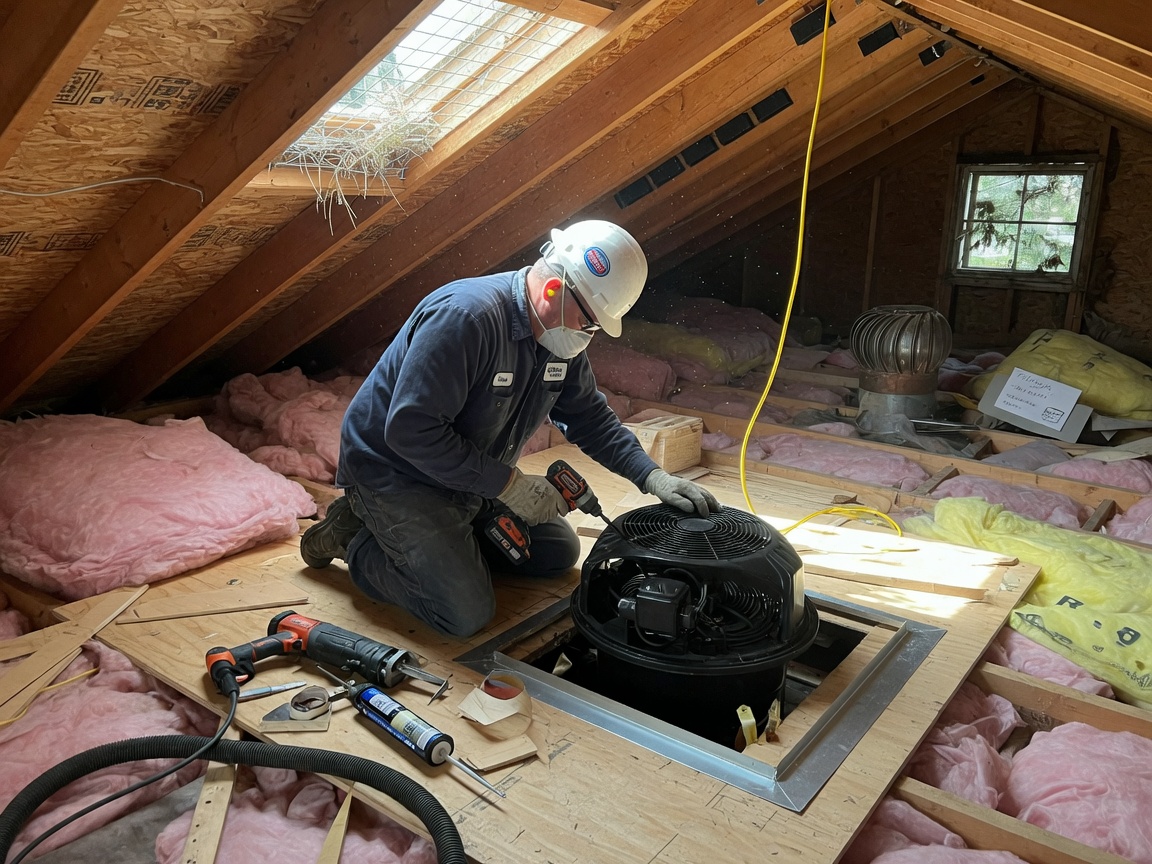
Proper attic ventilation helps move heat and moisture out of a Spokane home's attic while supporting the condition of the roof system above. Poor airflow can leave an attic excessively hot in summer or allow moisture to build up during colder months. We evaluate existing vents, airflow paths, insulation placement, and accessible attic areas before recommending changes. Homes in Browne's Addition may have older roof and attic designs where ventilation needs to be considered alongside existing insulation.
Common ventilation problems include blocked or inadequate intake vents, insufficient exhaust capacity, damaged vent components, and insulation that restricts intended airflow. An attic insulation upgrade can improve the attic assembly when insulation levels are inadequate, but it should be coordinated with ventilation so airflow paths remain open. Where additional insulation is appropriate without major changes to the existing material, an attic insulation addition may also be considered.
Roofing problems can sometimes become more noticeable when attic moisture or temperature conditions are not well controlled. During an evaluation, visible concerns around vents, shingles, and flashing can be documented, while a separate roof inspection can provide a closer review of the exterior roofing system. Homes in Comstock and other Spokane neighborhoods may benefit from checking attic ventilation when condensation, excessive attic heat, uneven temperatures, or recurring moisture concerns are present.
The right ventilation approach depends on the roof design, existing intake and exhaust openings, insulation placement, and attic configuration. We focus on improving airflow without creating new moisture paths or interfering with the roofing system. A properly planned upgrade can help the attic work more effectively with the insulation and roof components already in place.
Technician insight
In Spokane, the thing that catches most people out with Attic ventilation upgrade is heavy winter snow loads on older South Hill homes that block ridge vents unless baffles and proper intake are added first; skipping this step turns a simple vent job into repeated roof repair calls after the first thaw.
South Hill ice dam prevention
Homeowner on the lower South Hill noticed water stains after a heavy snow melt. We found blocked soffits and only gable vents on a 1940s home. Added continuous ridge venting with baffles and new intake sections, restoring airflow and stopping further moisture intrusion.
Attic Ventilation Upgrade Services We Offer
✓Ridge Vent Installation
Adds continuous ridge venting to improve exhaust airflow and reduce ice dam risk on Spokane homes during winter.
✓Soffit Vent Upgrades
Replaces or adds intake vents along eaves to balance airflow and prevent insulation blockage in older attics.
✓Gable Vent Conversions
Replaces ineffective gable-end vents with ridge and soffit systems suited to Spokane's snow loads and wind patterns.
✓Attic Baffle Installation
Installs baffles to maintain clear intake paths after insulation upgrades common in Spokane County homes.
✓Power Attic Fan Integration
Adds thermostatically controlled fans where passive venting cannot handle extreme summer heat on west-facing roofs.
Attic Ventilation Upgrade Cost in Spokane, WA
| Service | Typical Range | What Affects It |
|---|---|---|
| Ridge vent upgrade on single-story home | $850–$1,600 | Varies with roof length and access on flat lots |
| Soffit vent addition | $600–$1,200 | Higher on two-story homes or steep South Hill lots |
| Full balanced system retrofit | $1,400–$2,800 | Includes baffles and removal of old gable vents |
| Power fan addition | $450–$900 | Electrical tie-in and thermostat control |
Ranges are typical for Spokane, WA and confirmed with an exact written quote before any work starts.
How it works
- 1
Site Inspection
Measure attic square footage, check existing vents, and note roof pitch plus insulation depth on Spokane properties.
- 2
Vent Area Calculation
Determine required net free vent area based on local climate demands and current code guidelines for the Spokane area.
- 3
Material Selection
Choose ridge vent profiles and soffit panels rated for freeze-thaw exposure and wind-driven rain common here.
- 4
Installation And Sealing
Cut openings, install baffles, flash all penetrations, and verify airflow before cleanup.
- 5
Final Airflow Test
Confirm balanced intake and exhaust with smoke pencil or anemometer to ensure performance.
Pricing
Upfront quotes after inspection; final price depends on home age, roof access, and existing insulation depth.