
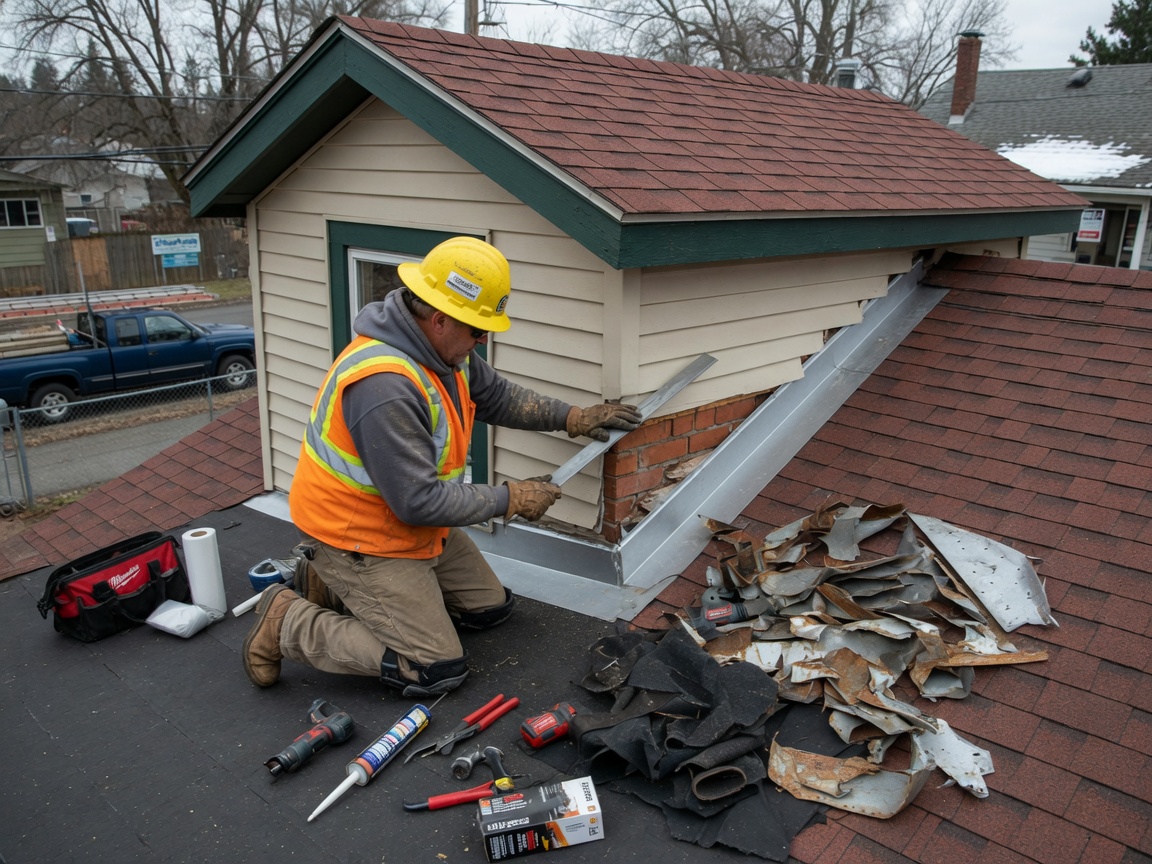
Spokane roofs take a lot of abuse around roof-to-wall transitions, chimneys, valleys, skylights, and other areas where different materials meet. Older homes, including properties in Browne's Addition, can have original step flashing, counter flashing, or valley metal that has corroded after years of snow, freeze-thaw cycles, wind, and moisture. When flashing begins to fail, water can travel behind siding, into attic spaces, or beneath the roofing materials before an interior stain becomes visible. Proper flashing replacement focuses on correcting the water path rather than simply covering the visible leak.
Chimney and wall flashing require careful integration with the surrounding roofing system. Step flashing should be installed in a shingle-style sequence so water is directed over the roofing surface instead of behind it. Counter flashing at masonry transitions also needs to be properly integrated with the chimney or wall rather than relying only on exposed sealant. Washington's adopted residential code includes requirements for corrosion-resistant flashing at locations such as wall and roof intersections and masonry-to-wall transitions. When existing flashing is heavily deteriorated, chimney flashing repair may be part of the larger repair.
Valley flashing is another common failure point on Spokane roofs because valleys collect runoff from two roof planes and can receive concentrated snow and meltwater. Some older roofs have woven or previously repaired valleys where sealant has been used instead of replacing deteriorated metal. During replacement, the affected roofing materials can be removed far enough to inspect the valley area and underlying decking for moisture damage. If damaged shingles are discovered around the valley, shingle replacement or roof leak repair may be needed along with the new flashing.
Other edge cases include flashing around skylights, vent pipes, roof-to-wall transitions, and older commercial parapets. Skylight curbs can develop leaks when flashing has deteriorated or previous repairs were made without addressing the complete drainage path. Vent penetrations can also leak when the flashing boot or surrounding roofing materials have aged. A detailed roof inspection can help determine whether one failed flashing component is responsible or whether surrounding roofing materials also need attention. Properties in Comstock and other Spokane neighborhoods can benefit from replacing deteriorated flashing before repeated moisture exposure leads to damaged decking, insulation, siding, or interior finishes.
Technician insight
In Spokane the thing that catches most people out with flashing replacement is how quickly original lead and galvanized pieces crack after thirty winters of freeze-thaw on pre-1970 homes in Browne's Addition and the lower South Hill. Homeowners often patch with sealant instead of replacing the metal, which only hides the problem until the next big snow melt.
South Hill chimney leak
Water stains appeared in an upstairs bedroom after heavy January snow. We found cracked step flashing on the north side of the chimney where it met the steep pitch. The old metal was removed, rotted sheathing replaced, and new copper step and counter flashing installed with a reglet cut into the brick. No further leaks occurred through the following spring melt.
Flashing Replacement Services We Offer
✓Chimney Flashing Replacement
Removes corroded step and counter flashing around masonry chimneys common on South Hill homes and installs new metal sealed into the brick.
✓Valley Flashing Replacement
Replaces failed valley metal on intersecting roof planes to handle Spokane snow loads and spring runoff without leaks.
✓Wall Flashing Repair
Replaces deteriorated flashing where roof meets siding on split-level homes in North Spokane to stop water entry behind exterior walls.
✓Skylight Flashing Replacement
Updates curb flashing and step flashing around aging skylights to prevent condensation and rain leaks in Spokane attics.
✓Parapet Wall Flashing
Installs new cap and base flashing on flat-roof parapets found on older downtown Spokane buildings.
Flashing Replacement Cost in Spokane, WA
| Service | Typical Range | What Affects It |
|---|---|---|
| Chimney flashing replacement | $350–$750 | Height, brick condition, and number of sides affect price |
| Valley flashing replacement | $400–$900 | Length of valley and need for decking repair |
| Wall-to-roof flashing | $250–$600 | Linear feet and siding type |
| Skylight curb flashing | $300–$650 | Size and roof pitch |
Ranges are typical for Spokane, WA and confirmed with an exact written quote before any work starts.
How it works
- 1
Site Inspection
We walk the roof and attic to locate all failed flashing, check for rotted decking, and note access challenges on Spokane's hilly lots.
- 2
Material Removal
Old flashing is cut out carefully to avoid damaging surrounding shingles or masonry while protecting gutters and landscaping.
- 3
New Flashing Installation
Step flashing, counter flashing, and valley pieces are installed with correct overlaps, hemmed edges, and sealant at masonry joints.
- 4
Final Water Test
We run water across seams and valleys to confirm no penetration before cleanup.
Pricing
Most flashing replacement jobs fall between a few hundred and low thousands depending on access and extent.